CPA & Accounting Firms IT Services:
IT & Cybersecurity Services for CPA and Accounting Firms
CPA and accounting firms depend on technology to protect sensitive client information, support employees, meet demanding deadlines, and keep work moving throughout the year. During tax season and other high-volume periods, even a short technology disruption can create significant operational problems.
MCS provides IT and cybersecurity services for CPA and accounting firms that need dependable support, stronger security, reliable backups, and ongoing technology management.
MCS can help firms manage technology while strengthening the technical safeguards that support their security, cyber insurance, contractual, and applicable compliance responsibilities. The right approach depends on the firm's systems, data, employees, vendors, risks, and regulatory requirements.
How Prepared Is Your Business for IT and Cybersecurity Risks?
Take our free 17-Point Technology & Cybersecurity Assessment to get a quick look at important areas of your technology, cybersecurity, backups, and business preparedness.
4 Big Reasons to Choose Memphis Computer Support
for CPA and Accounting Firms
1
2
3
4

Reliable IT Support for CPA and Accounting Firms
Accounting professionals rely on secure and dependable access to email, Microsoft 365, tax and accounting applications, client files, cloud platforms, and other business systems. Technology problems during busy periods can quickly affect employees, deadlines, and client service.
MCS helps CPA and accounting firms manage the underlying IT environment through proactive support, monitoring, cybersecurity, backup and recovery, user management, and technology planning. The goal is to reduce avoidable disruptions while helping the firm maintain a more secure and manageable technology environment throughout the year.
Protecting Client Financial and Tax Information
CPA and accounting firms handle information that can be highly valuable to attackers, including tax records, financial information, employee data, client documents, and account credentials. Protecting that information requires more than a single security product.
MCS helps businesses build layers of cybersecurity around users, devices, email, accounts, systems, and data. Depending on the environment, this can include multifactor authentication, endpoint and email security, patch management, monitoring, vulnerability management, employee security awareness, access controls, data backup and recovery, and incident preparedness.
Prepare Before Tax Season Gets Busy
Tax season can increase the impact of technology problems because employees are working under tighter deadlines and firms may be handling a higher volume of client communication, files, and requests.
Before busy periods, firms should review critical systems, employee access, software updates, backups, cybersecurity protections, remote-work requirements, and support procedures. Proactive preparation can help identify issues before they become more disruptive during the busiest part of the year.
MCS can help firms review and manage these technology areas as part of an ongoing IT and cybersecurity strategy.
Reduce Phishing, Account, and Payment-Fraud Risk
CPA and accounting firms regularly exchange sensitive information and financial requests with clients, employees, banks, and other third parties. Attackers may use phishing, compromised email accounts, stolen credentials, or fraudulent payment requests to take advantage of those trusted communications.
Strong email protection, multifactor authentication, employee security awareness, access management, monitoring, and clear verification procedures can help reduce these risks. Security should also be reviewed as employees join, change roles, or leave the firm.
Supporting Compliance and Cyber Insurance Requirements
Accounting and financial organizations may have cybersecurity obligations arising from laws, regulations, client requirements, contracts, professional standards, or cyber insurance policies. The requirements that apply vary by organization and the information it handles.
MCS can help evaluate and manage technology and cybersecurity controls, identify gaps, maintain technical documentation, and support remediation efforts. Technology services are one part of a broader compliance program; each organization remains responsible for determining and meeting its applicable legal, regulatory, contractual, and insurance requirements.
Common IT Challenges for CPA and Accounting Firms
Tax season and filing deadlines
Busy periods leave little room for slow systems, interrupted access, or unreliable communication. Preparing devices, accounts, updates, and backups ahead of deadlines helps reduce avoidable disruption.
Sensitive tax and financial documents
Firms work with tax returns, financial statements, identification details, and other confidential records. Secure access, file sharing, and data retention practices matter throughout the client relationship.
Phishing and fraudulent payment requests
Attackers may impersonate clients, employees, or vendors to steal credentials or redirect payments. Email security, employee awareness, and independent verification of payment changes can reduce exposure.
Remote work and seasonal staffing
Staff may work from home, travel between offices, or join temporarily during tax season. Consistent onboarding, multifactor authentication, and prompt removal of unnecessary access help protect firm systems.
Software access and vendor coordination
Accounting teams rely on tax software, document portals, cloud services, and other specialized applications. MCS can help manage the supporting devices, networks, accounts, and coordination with software vendors.
IT Services for CPA and Accounting Firms
Managed IT Services
Proactive IT support, monitoring, maintenance, and technology management to help keep your accounting firm reliable, secure, and productive.
Remote IT Services
Get secure remote IT support for authorized employees and devices, whether employees are working in the office or remotely.
Virtualization
Support secure, centrally managed access to business desktops, applications, and resources through modern cloud workspace solutions such as Azure Virtual Desktop when appropriate.
Data Backup & Recovery
Protect critical business data and prepare for recovery after hardware failures, human error, cyber incidents, and other disruptions.
Compliance Services
Support the technology and cybersecurity controls that are part of your organization's broader compliance, risk-management, and documentation responsibilities.
See what other business owners are saying about us…
Frequently Asked Questions About IT Services for CPA and Accounting Firms
What cybersecurity protections should an accounting firm have?
Accounting firms should evaluate security across user accounts, email, endpoints, networks, cloud systems, remote access, and sensitive client data. Important protections can include multifactor authentication, endpoint and email security, patch management, access controls, employee security awareness, vulnerability management, monitoring, tested backups, and incident response planning. The appropriate controls depend on the firm's technology environment, risks, client requirements, and applicable compliance obligations.
How can CPA firms protect client financial and tax data?
CPA firms can strengthen protection of client information by controlling access, using multifactor authentication, protecting email and endpoints, keeping systems updated, training employees, using secure methods to exchange sensitive files, monitoring for suspicious activity, and maintaining tested data backups and recovery procedures. Firms should also remove access promptly when employees or contractors no longer need it and regularly review how sensitive information is stored, shared, and protected.
What IT services does a CPA or accounting firm need?
A CPA or accounting firm may need managed IT support, cybersecurity, Microsoft 365 management, network and device management, backup and recovery, remote support, user management, vendor coordination, and technology planning. The right combination depends on the firm's size, applications, number of employees and locations, remote-work needs, cybersecurity risks, and applicable compliance requirements.
How can accounting firms reduce cybersecurity risks during tax season?
Before tax season, firms should review employee access, software updates, multifactor authentication, email and endpoint protection, backups, remote-access methods, security awareness, and incident-response procedures. Firms should also remind employees to be cautious with unexpected requests involving tax documents, credentials, payments, or account changes. Preparing before workloads increase can help identify security and technology issues before the busiest part of the year.
What should an accounting firm look for in a managed IT provider?
Accounting firms should look for an IT provider that can support day-to-day technology while understanding cybersecurity, backups, Microsoft 365, access management, remote work, documentation, and the technical safeguards associated with the firm's compliance and client requirements. The firm should also understand how support is delivered, what services are included, how security incidents are handled, and how the provider prepares for high-demand periods such as tax season.
How can CPA firms prepare for a technology outage or ransomware incident?
Firms should identify critical systems and data, maintain protected backups, test recovery procedures, document key vendor contacts, and establish a practical response plan. MCS can support the technology and recovery components, while the firm should assign internal responsibilities for client communication and business operations.

Need Reliable IT and Cybersecurity Support for Your Accounting Firm?
MCS can help you review your current technology environment, cybersecurity, backups, employee access, remote support, and the technical safeguards that support your broader business and compliance responsibilities.
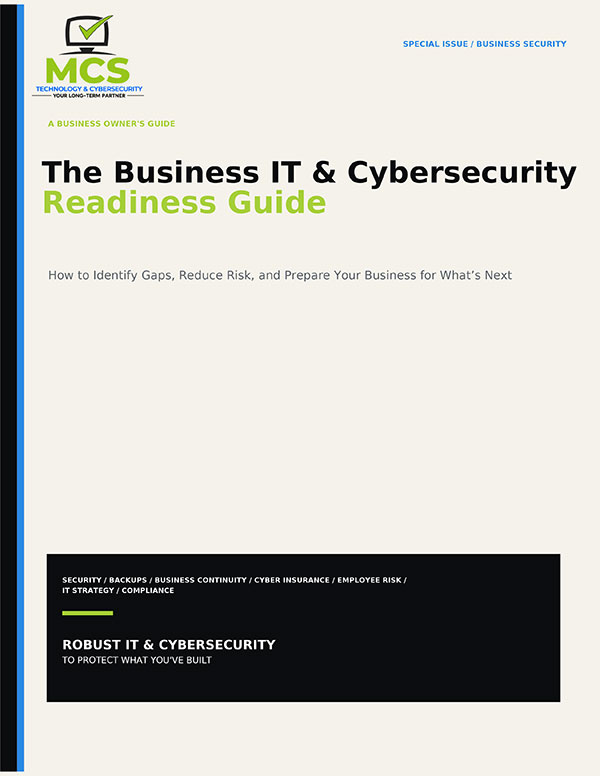
FREE BUSINESS IT & CYBERSECURITY GUIDE
Get practical guidance on cybersecurity, backups, business continuity, and protecting your business from technology risks.

